Week Seven CMU, Wednesday, July 4th – Friday, July 13th, 2018.


The final week at CMU tied up this transformative experience. Looking back from week seven it is difficult to comprehend the number of incredible people met, experiences, and personal skills gained. This is a summary of key meetings with Dr. Danks and Martial Hebert (Roboticist/A.I world-renowned expert), list of next steps for the research project, and reflection on skills gained.

The final meeting with Danks took place on Friday, July 6th 3:26- 4:12 PM. I wanted to use this rare opportunity to clarify next steps on the project, and listen to Danks advice on reading articles and writing papers. Danks started by going full circle to the beginning of this research experience. He wanted me to see research for what it is. You engage with an area of interest, question that conversation, seek to answer that question, and share your findings. Additionally, research is not for everyone. Many people prefer predictable and straightforward projects. Research is far from that. You may spend years on a project only to find out you asked the wrong question. As mentioned earlier, Danks works at the intersection of mathematics, philosophy, psychology, and computer science. You can create more interesting questions and answers because of the broad selection of disciplines. Knowledge is composed of all the disciplines. If you ask questions and answer those questions with research conventions across disciplines then a more accurate picture of the world emerges. These ideas propel Carnegie Mellon forward as a leading research institution in all major disciplines. Danks majored in Philosophy but is expected to publish in science magazines, psychology, and tech. Working under Dank’s guidance opened my eyes to this truth. Next, Danks discussed challenges of research article reading and writing.


Danks explained research skills simply take time. He has done this as a job for 23+ years. What about me? Six weeks… He shared a story from grad school. It was time for thesis writing and he struggled with reading abstracts and writing. Frustrated, He asked his advisor for help. “I have done this for 35 years, much longer than you were even born,” replied the advisor. These skills simply take time and you will feel grossly incompetent. Be patient with yourself.   

Finally, we outlined next steps for the publication draft. After I applied feedback from draft #1, Danks said my updated outline accurately addresses problematic areas he identified. Now that I know what we are arguing I can re-write the argument section. As mentioned before, Danks gave me full writing responsibility. There is one twist: Danks will re-write each drafted section. This is valuable because I will struggle through the process, and then see how an expert approaches the same ideas. Danks does this with graduate and Ph.D. students and now with me. With only six weeks before classes, we should aim for a completed first draft beforehand (As I write this post there are only 4.5 weeks remaining and I have not started any other sections). I thanked Danks for this incredible opportunity, and lessons learned.  

On my last day at CMU, I met with Martial Hebert director of the robotics institute at CMU. His research falls under the areas of computer vision and perception for autonomous systems with interests in the interpretation of perception data (both 2-D and 3-D), including building models of environments. Although not directly related to my project, I wanted to gain Hebert’s perspective on my research. He explained that A.I and autonomous vehicles are possible, but they are nowhere near full autonomy or safety standards. There simply is not enough road data and training for the A.I systems. Also, regulation and deployment policies are difficult to agree on. Hebert recommends “phased deployment.” That is, AVs are tested in small controlled areas and slowly expanded out. One key to achieving maximum benefits of AVs is public ride sharing. Hebert used UBER and Lyft as examples. The next generation may prefer ridesharing and the reduced costs associated with it. Without private ownership, these benefits can be achieved. Hebert recommends I think through a future without private ownership as a new way to approach this project.

Reflecting on the past seven weeks, I see incredible growth in three main areas. First, meeting preparation in professional settings. Prior to this experience, I just showed up to meetings without the background information of all participants or clear questions/goals. I also talked about projects and asked for help without first helping myself by working through them. Through trial and error, this skillset improved. I know have deliverables prepared, key questions, learning goals, and background knowledge of who I am meeting with.

Second, improved reading and writing skills. As Danks said, these skills take time and practice. Comparing where I was prior and after motivates me to keep moving forward. I used to just read articles/books from beginning to end or write papers without a guiding structure. Know I am confident scanning books and articles to find key arguments and supporting reasons/evidence. I discovered every genre of writing follows general guiding frameworks. Once I learn the framework I gain a bird’s eye view and can catch information relevant to research without getting lost in the details. Consistent daily journaling, blog posts, emails, and publication drafts changed how I think about writing. I discovered that writing is thinking. Without continual writing, my thoughts become stagnate. Engaging in these multiple genres of writing improved thinking of myself and the research process. I see these genres as a writing hierarchy. Journaling is the bare minimum and gets ideas flowing. Blogging takes those general ideas and imposes structure as related to a project or personal journey with a professional twist. Publication writing takes all your thoughts and imposes well-defined conventions and methods to create a professional polished product. The higher you go, the more complex the ideas and editing processes become. Experiencing all main writing genres at once gives me the confidence to just write without fear. Journaling gets my ideas going, leads to blog posts, emails, and publication drafts.

Third, I gained a broader perspective on learning. Cal State University Monterey Bay is primarily a teaching institution whereas Carnegie Mellon is a research institution. The work at CMU is the behind the scenes work for teaching institutions. Engaging in research and exploring ways to create new knowledge excites me because this is what teachers use to teach in classes. Most important of all, I discovered just how much I don’t know. The world is a complex place and the discoveries are limitless. There are over 70+ academic disciplines and I only scratched the surface of four. If anything, this was the most important lesson I learned from this research experience. Paradoxically, this acceptance of ignorance opens the door to learning far more. I look forward to exploring and discovering new knowledge and giving back through teaching and public outreach.

In conclusion, this research experience was truly transformative. I worked with incredible faculty, experienced the research process, and deepened my passion for learning. All of this would not be possible without the support of family, friends, mentors, UROC team, fellow scholars, and peers. Thanks to all who made it through the blog posts. I will post updates on research and give a detailed description as drafts improve. Thanks!
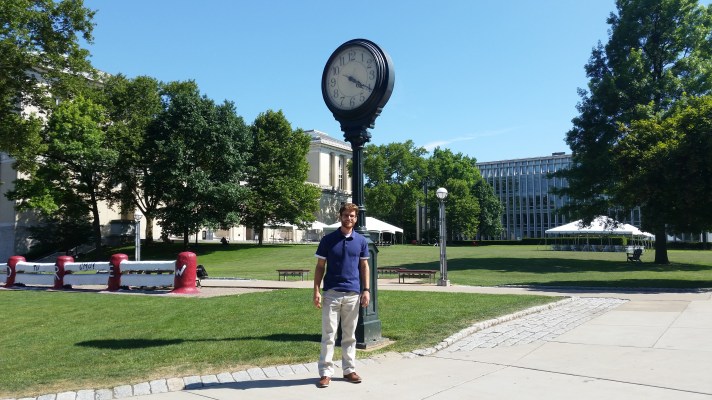
20180712_162128


Week Six CMU, Tuesday, June 26th – Wednesday, July 4th, 2018.


The main focus this week was understanding and applying Dr. Danks feedback from draft number one. As stated in the previous post, writing is difficult, but there are steps or methods that lead to an excellent product. This is a summary of Dr. Dank’s feedback, how I responded to and applied the feedback, our meeting this Tuesday, July 5th, and finally, next steps and targets for the final week at CMU.

After three days of suspense, Danks sent extensive comments and suggestions on draft #1. He said I was on the right track, but need to “Carefully and clearly lay out the main argument(s) and reasons for those arguments in much more detail.” Also, if something is not commented on it is fine for the current stage. Nearly 90% of the draft was marked in red… With over 19 detailed comments I had no idea where to start. However, I determined to categorize the feedback, find main themes, and apply them to the second draft.

20180605_172756
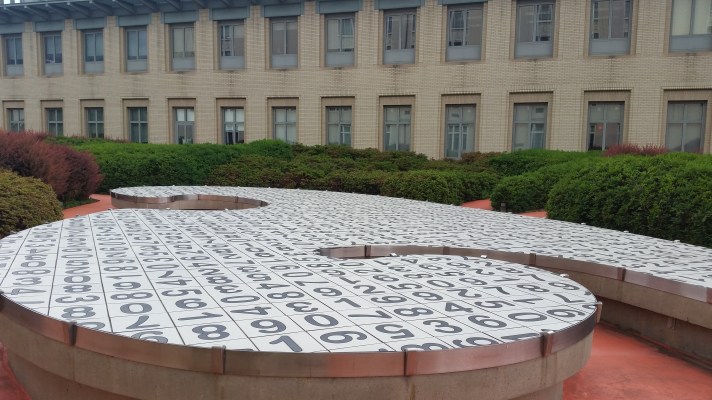
Number Garden

Understanding the feedback took nearly five days. I was determined to figure out what key idea or concept I was missing. Deep down I knew I did not completely understand the main argument which lead the draft into a wild rabbit hole chase. This intuition proved accurate. Although Danks was accommodating in the critique, he was also brutally honest. I simply did not know what the heck I was talking about. Paragraphs moved around too quickly, ideas were scattered, and examples poorly supported. After the cold truth settled in, I accepted the fact that good writing takes time. I saw this draft as a first start to understand what the main argument is. Through writing, your ideas and opinions develope. If you don’t write, ideas remain in dark corners of your subconscious mind, hidden until you pick up a pen or start typing. After three more days, Danks contacted me for the next meeting. I was excited and determined to leave that meeting with a full understanding of what we were truly arguing.

We met in Baker Hall Tuesday, July 3rd at 11:00 AM. Dr. Danks just returned from a week and a half stay in Rome (most likely discussing Artificial Intelligence for good with academics or government). First, we discussed why academic writing is so challenging. Danks said traditional class writing is not nearly as difficult because lectures and readings contain most information for projects and papers. Contrastingly, research/ academic writing is difficult because there is “no right answer.” There is no writing prompt or pre-selected reading material, you must find and create a completely new piece of knowledge, not merely recite existing ideas. This is what separates a teaching institution such as CSU Monterey Bay from a research institution like Carnegie Mellon. For example, instead of merely playing an existing piano piece, you must compose, edit, and perform an entirely new one. Danks said he lets graduate students struggle with drafts and then re-writes it for them so they can see how a seasoned researcher approaches the same ideas.

Next, we discussed the benefits of writing the argument section first, and concluded with my full understanding of the main argument. Starting with the argument you clarify exactly what the entire paper is about. This is the most difficult part of the paper. If you start here and perfect his section, then supporting ideas should fit like missing puzzle pieces. Additionally, you avoid a “bloated” paper. Starting with the intro, body, and then the argument, you will most likely include large amounts of irrelevant “bloated” information. Academic writing is difficult already, so make the reader’s job easier by including exactly what you need to support the argument. Also keep your expectations realistic. Danks says a publication worthy paper takes about six months. After this, I asked Danks to explain an equation formula that holds the key to the main argument. He mapped it out on a large white board and suddenly everything just clicked. As a sneak peek here is the equation… Magnitude = Rate x Usage.

20180624_202015
Front of Museum

Research aside, I visited the Carnegie Museum of Art and Natural History. The worlds best Dinosaur collection and rare stones including CMU’s MoonArk project reside within the walls. I walked through Carnegie Hall and Carnegie Music Hall as well. Words cannot describe the extravagant beauty and the thousands of years of human labor and ingenuity contained within this museum. 

f7a65b2edebf56d55cc0241925ba0422
Carnegie Hall


Overall, this week proved challenging yet again. After two weeks of struggling with researching and writing, yesterday’s meeting made it all worthwhile. I broadened perspectives walking through time in the Carnegie Museum of Art and Natural History. As of now, I have a detailed outline for draft #2 and will share these ideas with Danks tomorrow Friday, July 5th at 3:30 P.M. With only one week remaining, I’m determined to write as much as possible and enjoy the final nine days in Pittsburgh.

Week Five Carnegie Mellon. Tuesday, June 19th – Tuesday, June 26th, 2018.

This week could well be considered “game time week.” It is time to take what I learned about Artificial intelligence and self-driving cars and build a coherent paper outline/draft. Dr. Danks tasked me with full writing responsibility for the publication draft. This is a summary of Dank’s specific directions outlined in our last meeting, the challenges of writing,  how procrastination is transformed into something valuable, and future goals for the remaining two weeks at CMU.

My last meeting with Dr. Danks was Friday, June 15th, 2018, at 10:30 A.M. The purpose was to clarify our guiding research question and argument. As mentioned before, I did not have a brilliant flash of insight for the paper. Instead, by discussing my findings, and exploring potential paths, Danks created a unique argument out of that conversation. The purpose was to show me how a researcher thinks, while simultaneously adding expert skills into my own toolbox. We then discussed the argument outline and flow. Because I struggled with last weeks outline and what to include in the introduction, body, argument, and conclusion, Danks says we will tackle the most difficult part first: the argument.

Dank’s rationale for this is two-fold. First, you tackle the most difficult part of the paper first. If you write from beginning to end you may be fatigued at the argument section. Second, and most important, composing the argument first ensures including only what you absolutely need. For example, you may write six great paragraphs in the opening sections only to find out it must be omitted as it does not fit in the argument section. Write the argument section first while pretending everything else is written. When completed, the introduction, body, and conclusion should “fit” in like “puzzle pieces.” I was instructed to fill out the argument in detail and draft it. Once again, full writing responsibility is on me, and Danks will provide honest feedback.

Given that Danks was traveling again for two weeks,  I was left with three simple instructions. One, write the argument section. Two, when I feel that I gave it a good shot, send it for feedback. Three, after sending it, start gathering sources for the remaining sections. These three tasks were this week’s primary research-related focus.

We must take a small detour before moving on. Working on a draft so soon was entirely unexpected. In research, a publication is akin to the holy grail. Traditional research is usually conducted in this order: poster presentation, talk, and then journal publication. During a Skype interview prior to CMU with Dr. Danks, he specifically told me not to expect a poster, talk, or publication. If this was what I wanted then I should consider somewhere else. In a sense, Danks set the expectation bar extremely low.  Now, after working diligently and applying everything he taught, this opportunity arose out of that hard work. Not expecting it only sweetens the deal. What is left to do? Write the darn paper…

20180619_172457
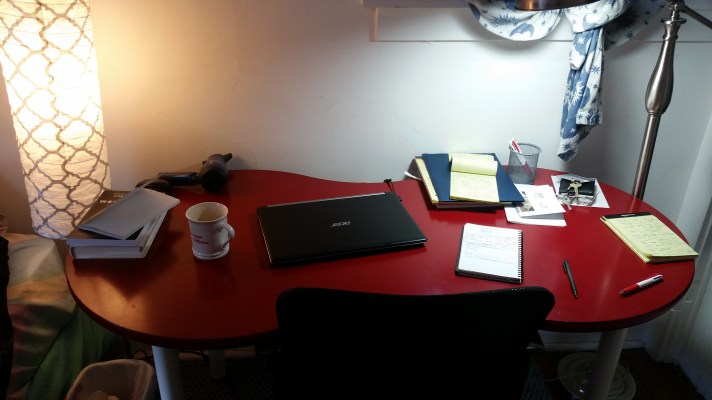
Typical desk setup at AirBnB house

Writing is difficult. These “simple” instructions proved extremely challenging. For me, the hardest part this week was just sitting down and writing. Why? Fear of the not knowing what I know about the topic, and jumping into the argument section that I did not compose from original thought. Instead of writing,  I dedicated the next five days from the meeting to clarify the question and argument. After two more days of painful struggle and procrastination, I finally sat down for the big moment. The first draft took 50 minutes. What looked so daunting was conquered in a short time. All the pre-writing, thinking and planning took 15 hours. That time was not wasted, and in retrospect probably a wise choice. I sent Danks the draft this Saturday and now await his reply.

While struggling with writing, I read books in the Cathedral of Learning. A mind tickling read was “Artificial Intelligence: The Very Idea.” The main idea is that human minds function like computers being governed by laws of logic and order. If so, why can’t we create machines that “think” like us? The book explores early foundations of mind and intelligence, what a computer is and how it works, and finally speculates the future of duplicating human intellect in machine form. This activity proved a valuable form of procrastination. The key when struggling with writing is premade backup plans of action. If I struggle with this then I will do this… Whether that be reading, talking to other researchers, studying math, or journaling (this may kickstart ideas and you are typing already). These backup plans avoid destructive paths and regretful decisions.

Overall, this week was challenging and yet rewarding. I learned how an expert researcher thinks, worked on a publication draft, and procrastinated wisely. With only two weeks remaining, meeting again with Danks is imperative to conclude this transformative experience. To top it all off, possibly going to Uber HQs and get their perspective on Self-driving cars. Finally, meet with Martial Hebert, director of the robotics institute and gain a purely technical assessment of Artificial intelligence technologies.


Week Four, Carnegie Mellon, Tuesday, June 12th – Tuesday June 19th

This week’s primary focus was structuring the paper outline, with an emphasis on the argument section. Second, to that, I not only met with my primary mentor Dr. David Danks, but also Alex John London, director of History, Ethics, and Public Policy. This is a brief summary of those meetings, reflection on CMU ’s academic excellence, the joys and struggles of academic composition, and finally, the benefits of daily journaling and weekly blog posts.

I met with Dr. Alex John London, Wednesday, June 12th to discuss self-driving cars and policy. There were three main takeaways; One, always refer to history concerning new technology adoption, two, move beyond the discussion of philosophy and policy and apply them to real-world problems, and third, read John Stuart Mill’s famous essay “On Liberty.”

People fear change and disruptive technologies. One key example London referenced concerned mathematical calculations by “human computers.” In the 1960s, calculators were new, and computers still in their infantile stages. Astronaut John Glenn famously demanded human-computer Katherine Goble to double check his return calculations. He did not trust the new computers. London also explained we do not want the game of musical chairs in life mixed up and lose our seat. Similarly, self-driving cars pose a threat to transportation norms. 

London explained that today’s philosophy focuses on talking about Plato and Aristotle but not solving problems with those ideas. London’s ancient philosophy background combines mathematical computation, the scientific method, ethics, and philosophy in one. Ancient philosophy focuses on solving problems with the intersection of these fields, not talking about them. This is why as a historian, philosopher, mathematician, and ethicist, London not only talks about problems but uses these skills to solve real-world problems. 

Reading “On Liberty” by John Stuart Mill provides the context of values and individuality present in the United States. London recommends this book as a springboard into values self-driving car policymakers should respect. Here are the three main arguments; One, freedom of individual thought, expression, consciousness, and speech and writing; two, freedom to live as one pleases as long as does not interfere with other’s lives; third, freedom to peaceably assemble.

Although these three main areas may seem far-fetched concerning self-driving cars, London explains they are vital in today’s conversation.

I met with Dr. Danks Friday, June 15th to discuss my findings and discuss the drafting stage of research. After I researched and filled out the paper outline, Danks proposed we write the main argument first. This way I don’t waste time and energy writing about all the benefits of self-driving cars only to realize most of it is useless regarding the argument. After extensive discussion, we clarified the structure of the argument and final question we are addressing. This week’s task is drafting the main argument and sending it to Danks for feedback.

Moving from a teaching institution at Cal State Monterey to a research-intensive university is truly mind-boggling. The level of rigor, academic excellence, interdisciplinary research, and high standards of professionalism force me to elevate my standards and approach to research. These two faculty members are incredible inspirations and true reflections of vintage CMU. My mentor Dr. David Danks is a world-renowned psychologist, philosopher, and mathematician. Danks works at the intersection of these fields to achieve truly unique contributions in academia. As London points out, you must move beyond theory and academic discussion to solving real-world puzzles. Danks does just that by traveling around the world talking to policy and government leaders regarding autonomous technologies. Not just cars, but warfare systems, and medical applications as well.

I am humbled to work with incredible people such as Danks and London. They inspire me to learn more than a traditional degree. They inspire me to work at the intersection of mathematics, history, philosophy, and social science. This experience is much more than “self-driving cars,” it opens the door to walk towards what I truly want to study and ultimately contribute back to the world.   

This does not go without saying that research and sharing your findings is easy. I struggle and still struggle with just writing those first drafts, or choosing one more article from the vast ocean of literature. Yes, Danks and London inspire and guide me, but the path is not easy.

One final point. On top of weekly blog posts, I keep a detailed daily journal. Each entry summarizes research related work or meetings with professors. Additionally, I write any thoughts or ideas on this research, findings, feelings, insights, joys, and frustrations. Most important of all, I can identify what does and does not work. Daily habits or routines that result in poor research focus, or days that just click. Hidden rationalizations or excuses that hinder productivity and peace of mind emerge as well. One month and 30,000 words later, who I am is stepping into the sunlight for analysis. You could say this is self-research. Finding what is there. Questioning it. And identifying what is missing or could be better.

This post is longer than usual, but the previous week had much to offer. Research goal(s) for the following week(s) include; composing the arguments section, and meeting with Martial Hebert, director of the Robotics Institute to discuss A.I and Self-driving cars.     

Week Three, Carnegie Mellon, Tuesday June 5th – June 12th, 2018

The primary focus of this week was gathering sources for each set of claimed benefits self-driving cars will bring. These benefits include: Reduced fatalities, lowered emissions (assuming electric, shared, and autonomous cars), reduced traffic, lowered parking needs, increased mobility for disabled/elderly populations, and increased productivity. Google scholar quickly became a close companion. One difficulty in this research is the fact all these claims of benefits are projected for the year 2050- 2060. More specifically, there are limited models for reduced crashes due to lack of real miles driven by autonomous cars.

I quickly discovered that research is extremely tedious and there is no one set method of going about it. There is always the question(s) of, what article is best? What source is credible? What are authors motivations/why are they writing this? Are the models used to predict future events and outcomes accurately? However, just sticking to it, and searching through trial and error, my ability to decipher useful sources improved this week. Along with these challenges, I focused on gathering accurate contextual, theoretical, and methodological background information.

To solve this problem, I will read up on the historical context of transport, artificial intelligence systems, machine learning, algorithms, game theory, and applied/normative ethical theories and frameworks. Looking at where we came from, combined with the tools that brought us here, and analyzing that through timeless values such as autonomy and freedom create are a good starting point to enter this conversation.

On Tuesday, June 12th, 2018, at 1:30 pm, I met with Dr. Danks to go over my findings. Danks just returned from a one week visit to China after discussing issues surrounding A.I and society with thought leaders and government. We discussed my findings and refined the research focus even further than last week. Danks said I have the basis for a strong paper. (For publishing purposes, I will not reveal the questions or methods until after the research is complete). We brainstormed on a monstrous whiteboard and Danks demonstrated how a researcher thinks about these issues and formulates paper outlines.  He took my findings, drew connections, and mapped out a tentative paper outline. Danks estimates we can complete a draft over the next 5 weeks. My assignment for the next 3 days is filling out the outline and brainstorming original ideas and arguments.

Overall, this week was challenging but rewarding. Meeting with Dr. Danks and setting a concrete goal(s) and draft deadline motivates me to keep moving forward. Our next meeting is this Friday, June 15th, 2018.  

Week Two Carnegie Mellon Tuesday, May 29th- Tuesday, June 5th

This week’s focus was answering all the questions generated by the question tree. This will help narrow down the final question for the next five weeks.

Going through these steps and exploring all the interconnected stakeholders, created a holistic view of the complexities surrounding Artificial Intelligence (A.I) technologies. After answering the sub-questions, I met with Dr. Danks Friday, June 1st at 12:30 pm to finalize the research focus.

Danks asked me to articulate how the sub-questions relate to and explain the original question “Will autonomous vehicles lower the annual fatality rate in the US?” I explained that the causes of the 37,000+ fatalities are drinking, speeding, distraction, and poor judgment. 50% of fatalities occurred in 55mph zones in rural areas and 47% in Urban with an average age group of 16-25 years old. I also cited a study claiming that full adoption of autonomous vehicles will reduce fatalities by 30,000. From here we discussed how autonomous vehicles ought to be distributed if they will lower the fatality rate. But wait, the process gets more complicated.

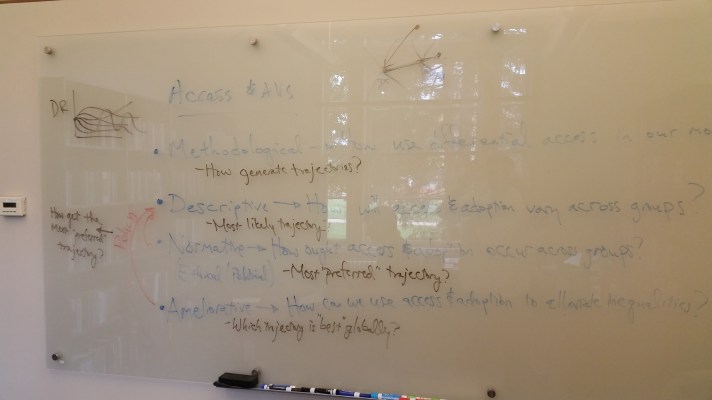
There are four different types of questions and they all play an integral role in creating policies that can reduce fatality rates.

  1. Methodological – How use different access in our model?
    1. How generate trajectories?
  2. Descriptive – How will access and adoption & adoption vary across groups?
    1. Most likely trajectory? – persuade general public
  3. Normative – How ought access and adoption occur across groups?
    1. (Ethical/Political) Most “preferred” trajectory?
  4. Ameliorative – How can we use access and adoption to alleviate inequalities across groups?
    1. Which trajectory is “best” globally?
  5. For the descriptive, normative, and ameliorative how can we get the most preferred trajectory? (POLICY)

20180601_135028

There are not only different types of questions that need addressing but different reasons and justifications for deploying SDVs. These include reduced fatalities by 30,000 in the year 2040, lowering emissions, improved traffic flow, less parking structures, increased mobility for disabled populations (If SDVs are fully autonomous), luxury and time/productivity, and finally, enormous economic incentives. Not all of these benefits can be fully realized at once as many are incompatible or in mutual tension.

From here, the research question shifted to “Given all the reasons and justifications for SDVs deployment, how ought these vehicles be distributed and for whom, to reduce fatalities, and which of these reasons and justifications incompatible? Now that the question is significantly narrowed, and addresses a gap in the existing literature, I can begin to gather sources to answer the question.

Overall, this week was exciting and challenging. exploring the neighboring Pitt State campus was an incredible experience. Specifically the Cathedral of Learning. The prestigious building is 500 ft tall or 42 stories high. I went to the highest possible floor #36 to explore University Honour’s College of Philosophy. There is a great deal of books, beautiful woodwork, and breathtaking views. It is incredible.

Goals for this week (Tues, June 5th – Tues, June 12th) include answering the new question, organizing current research, and discussing results with Dr. Danks Tuesday, June 12th at 1:30 P.M. Lastly, exploring policy proposals with Alex J. London, director of the Ethics and Policy Center at Carnegie Mellon.

Week One,Carnegie Mellon, May 22-29th


The first week at CMU was a combination of introduction to scholarly work, settling into a new area, and enjoying the beauty of the campus. First, I met Dr. David Danks in his office in Baker hall to discuss what research is and how to conduct it. We discussed the importance of a scholar choosing a domain of personal interest and exploring questions that are fascinating. As a new scholar in autonomous technologies and ethics, I am unfamiliar with research question formulation, and methods to answer that question. Danks walked me through the idea of a question tree. The original question/ problem you pose will inevitably have multiple layers of other questions attached to it that must be considered before accurately addressing the central question. The question/problem is the heart of your research and you must explore many possible angles for the most accurate solution. My work for this first week was creating 1-3 question trees.


I pose the question, “Will autonomous vehicles reduce the annual fatality rate in the United States?”  As Danks explained, that this one question must be looked at from a range of other related questions. This has many layers to it that must be addressed. Are Self-driving cars (SDCs) safer than human drivers on average? How do you measure that? By fatalities per mile? What are the primary causes of vehicle-related deaths? Where do most fatalities occur, and will SDCs be available in those areas? Main demographics, pedestrian/driver/passenger? Will people who afford SDCs belong to this main demographic? What time frame will there be mass adoption of SDCs? What will that transition look like? What stages? Where will the majority of these cars drive? How will human drivers react to autonomous vehicles, will they be more aggressive, passive, or intimidating? Will this gradual introduction correlate to a temporary increase in fatalities although not directly from autonomous vehicles? How should autonomous vehicles respond to contextual shifts in other people’s driving?  

The questions go on and on and can be very overwhelming. After creating this tree, I read scholarly journals and popular media to discover what the broader conversation is surrounding these questions and which ones are related to the original one. This was challenging. It is hard to know when enough is enough or if what you are doing is a waste of time. Also with limited background knowledge and experience, it is easy to give into despair and give up. I procrastinated a lot. Planned instead of worked. And worked out or played the piano to take my mind off the horrors of research. However, through keeping a very detailed daily journal I was able to identify what attitudes and approaches do and do not work. I am here to learn how to research. It is ok to make lots of mistakes, but not repeat them over and over. Also talking with former UROC scholar Philip Cooksley who is majoring in A.I Planning and decision making was incredible.

20180523_193920
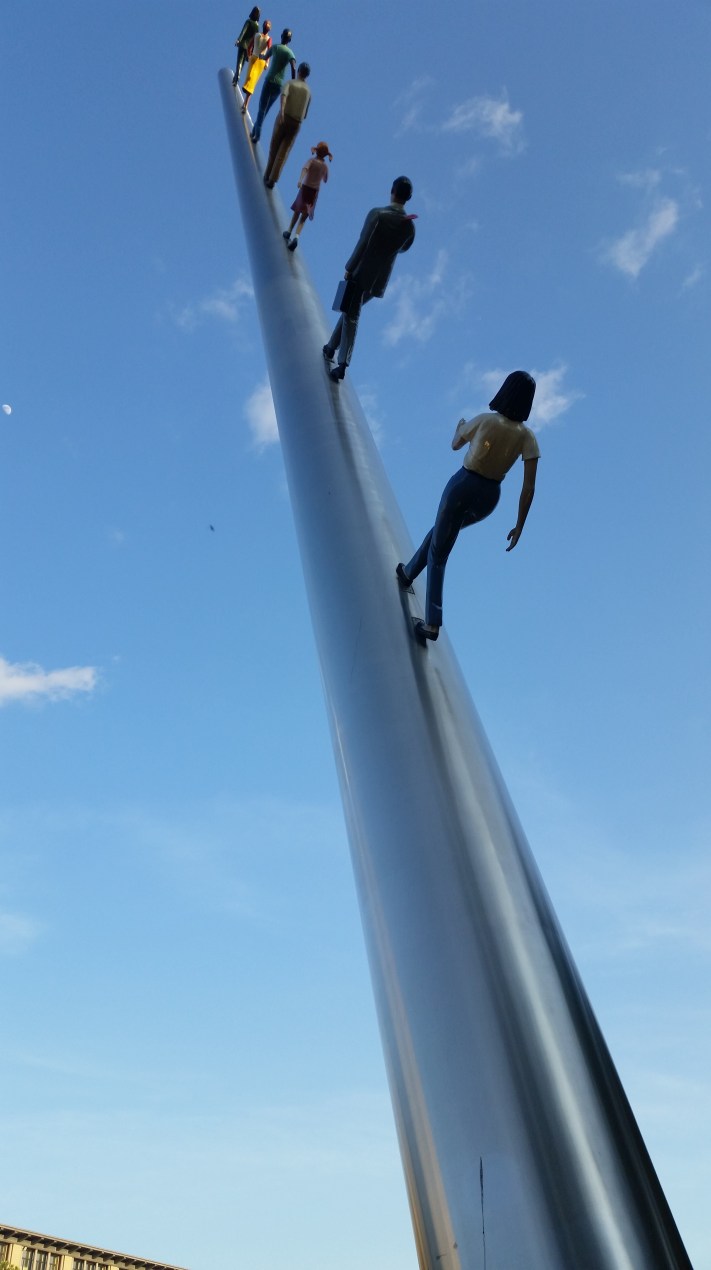
“Walking to the Sky”

Overall, the first week was exciting and overwhelming at the same time. Being mentored by an expert in Autonomous systems ethics and policy at Carnegie Mellon was something totally unexpected. I thought I would be in the CSUMB library alone reading books all day. But here I am, ready to learn as much as possible, and most of all, enjoy this incredible experience.

Week 1 CMU

Looking forward to arrival at Carnegie Mellon May 21st.

This research is looking at the intersection of ethics and A.I. The technology of interest is Self-driving cars (SDGs) and the specific question/issue and methodology will germinate in the first two weeks. Currently looking at the ways these technologies will be integrated into society and how and what that looks like from a practical point of view.

This research is exploratory in nature but will develop into a specific measurable study in the future.