

This week could well be considered “game time week.” It is time to take what I learned about Artificial intelligence and self-driving cars and build a coherent paper outline/draft. Dr. Danks tasked me with full writing responsibility for the publication draft. This is a summary of Dank’s specific directions outlined in our last meeting, the challenges of writing, how procrastination is transformed into something valuable, and future goals for the remaining two weeks at CMU.
My last meeting with Dr. Danks was Friday, June 15th, 2018, at 10:30 A.M. The purpose was to clarify our guiding research question and argument. As mentioned before, I did not have a brilliant flash of insight for the paper. Instead, by discussing my findings, and exploring potential paths, Danks created a unique argument out of that conversation. The purpose was to show me how a researcher thinks, while simultaneously adding expert skills into my own toolbox. We then discussed the argument outline and flow. Because I struggled with last weeks outline and what to include in the introduction, body, argument, and conclusion, Danks says we will tackle the most difficult part first: the argument.
Dank’s rationale for this is two-fold. First, you tackle the most difficult part of the paper first. If you write from beginning to end you may be fatigued at the argument section. Second, and most important, composing the argument first ensures including only what you absolutely need. For example, you may write six great paragraphs in the opening sections only to find out it must be omitted as it does not fit in the argument section. Write the argument section first while pretending everything else is written. When completed, the introduction, body, and conclusion should “fit” in like “puzzle pieces.” I was instructed to fill out the argument in detail and draft it. Once again, full writing responsibility is on me, and Danks will provide honest feedback.
Given that Danks was traveling again for two weeks, I was left with three simple instructions. One, write the argument section. Two, when I feel that I gave it a good shot, send it for feedback. Three, after sending it, start gathering sources for the remaining sections. These three tasks were this week’s primary research-related focus.
We must take a small detour before moving on. Working on a draft so soon was entirely unexpected. In research, a publication is akin to the holy grail. Traditional research is usually conducted in this order: poster presentation, talk, and then journal publication. During a Skype interview prior to CMU with Dr. Danks, he specifically told me not to expect a poster, talk, or publication. If this was what I wanted then I should consider somewhere else. In a sense, Danks set the expectation bar extremely low. Now, after working diligently and applying everything he taught, this opportunity arose out of that hard work. Not expecting it only sweetens the deal. What is left to do? Write the darn paper…
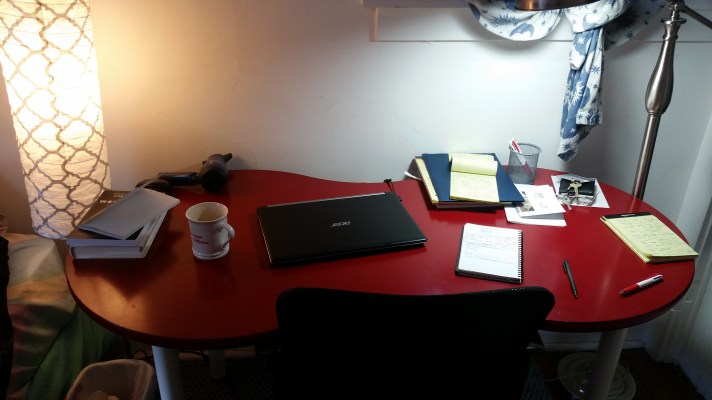
Writing is difficult. These “simple” instructions proved extremely challenging. For me, the hardest part this week was just sitting down and writing. Why? Fear of the not knowing what I know about the topic, and jumping into the argument section that I did not compose from original thought. Instead of writing, I dedicated the next five days from the meeting to clarify the question and argument. After two more days of painful struggle and procrastination, I finally sat down for the big moment. The first draft took 50 minutes. What looked so daunting was conquered in a short time. All the pre-writing, thinking and planning took 15 hours. That time was not wasted, and in retrospect probably a wise choice. I sent Danks the draft this Saturday and now await his reply.
While struggling with writing, I read books in the Cathedral of Learning. A mind tickling read was “Artificial Intelligence: The Very Idea.” The main idea is that human minds function like computers being governed by laws of logic and order. If so, why can’t we create machines that “think” like us? The book explores early foundations of mind and intelligence, what a computer is and how it works, and finally speculates the future of duplicating human intellect in machine form. This activity proved a valuable form of procrastination. The key when struggling with writing is premade backup plans of action. If I struggle with this then I will do this… Whether that be reading, talking to other researchers, studying math, or journaling (this may kickstart ideas and you are typing already). These backup plans avoid destructive paths and regretful decisions.


Overall, this week was challenging and yet rewarding. I learned how an expert researcher thinks, worked on a publication draft, and procrastinated wisely. With only two weeks remaining, meeting again with Danks is imperative to conclude this transformative experience. To top it all off, possibly going to Uber HQs and get their perspective on Self-driving cars. Finally, meet with Martial Hebert, director of the robotics institute and gain a purely technical assessment of Artificial intelligence technologies.

 Timothy Geary Portfolio